
The most-quoted numbers about Winter Park’s rental market are the least reliable thing about it. Depending on which data vendor you believe, a typical short-term rental there runs somewhere between 43% and 53% occupancy at a nightly rate somewhere between $302 and $429, across an active-listing count reported anywhere from about 900 to 1,800.1 Those are not small discrepancies. They are the difference between a good year and a bad one, and they come from vendors measuring different listing sets with different occupancy definitions. Anyone underwriting a Winter Park purchase off a single headline number is the mark, in the same way the buyers who acted on the viral “Airbnb collapse” charts of 2023 were the mark.2
The signal under the noise
Strip out the vendor disagreement and one thing is consistent. Rate is holding while occupancy softens under new supply. AirDNA’s late-2025 read of the national market describes exactly this: average daily rates up 3% to 5% year over year, occupancy compressing as listings grow, and revenue per available rental roughly flat as a result.3 Winter Park is a sharper version of the same pattern, because it is a small market about to absorb a large deliberate increase in supply.
That is the fact that matters for a buyer. The market is not collapsing and it is not booming. It is a rate-defended market with more doors arriving, which means the average listing earns less each year even as the good listing holds. Averages will mislead here more than usual.
What actually got approved
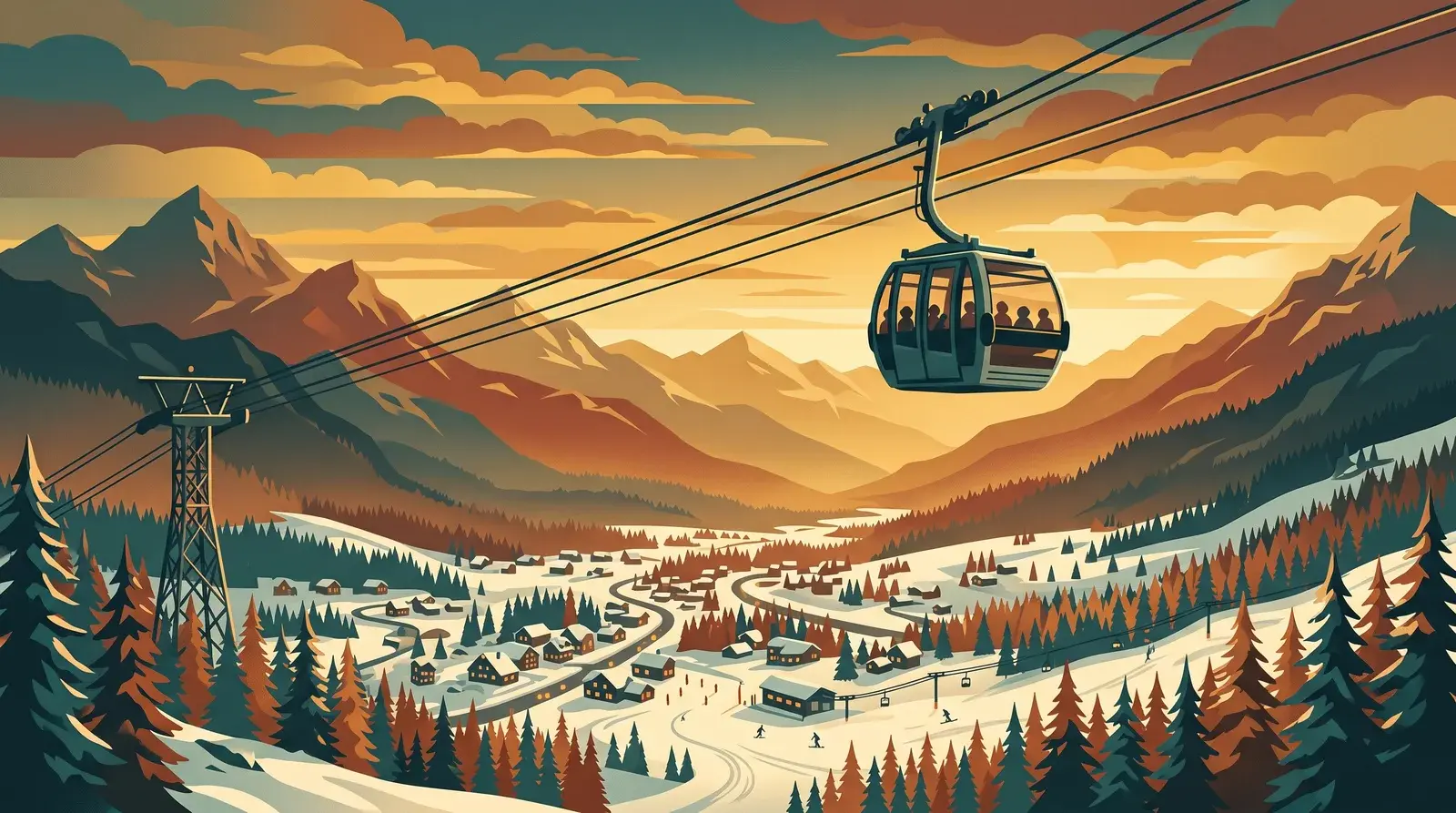
On June 3, 2025, the Winter Park council approved a roughly $2 billion master plan and rezoned the base area as a Destination Center district, clearing the way for up to 2,950 new residential units and 250,000 square feet of commercial space; the town has been explicit that the final unit count may come in lower depending on site plans.4 The centerpiece is a ten-person gondola running nearly two miles from Cooper Creek Square downtown to the resort base, financed by Alterra Mountain Company through a public-private partnership, with the town using tax-increment financing through a new urban renewal authority to fund the connected public infrastructure.5 Construction could begin as early as summer 2026.
There is a mountain component as well. A proposed expansion onto Vasquez Mountain would take skiable terrain to 3,439 acres, which would make Winter Park the third-largest ski area in Colorado behind Vail and Steamboat.6 Combined with expanded rail service to the valley, the plan converts a drive-and-park town into a lift-connected village. That is a genuinely different place, and a genuinely different rental market.
Two true things, and the gap between them
The gondola and the larger mountain make Winter Park a better place to own real estate for the next twenty years. Lift-connected, walkable inventory is the kind that holds its rate through cycles, and once the base corridor fills in, no one can manufacture more of it. Scarcity is being created at the exact locations the gondola will serve.
The same approval that improves the town also pushes up to 2,950 new doors into it, and supply of that size arrives before the amenities that justify it. New supply compresses rate first and recovers later, and the compression falls hardest on the generic listing that competes only on price.
Where I land
I would not buy Winter Park rental inventory on a pro forma that holds today’s rate flat, and I would trust no single vendor’s occupancy number to build that pro forma in the first place. Both are how buyers lose money in a market like this.
I would buy the specific unit that stays scarce after 2,950 doors open: within walking distance of the gondola line, in a form a new build cannot replicate, and operated well enough to defend its rate while the marginal listing panics and discounts into the new supply. That is a much shorter list than what is for sale in the valley today, because most of what is listed is precisely the generic inventory that the new supply will squeeze. The uncertainty I would underwrite carefully is timing: a permitting approval does not guarantee the gondola gets built on schedule, and if base construction slips, the supply arrives before the amenity that is supposed to absorb it. Buy the scarce unit and underwrite the rate conservatively. If the gondola opens on time, that is upside on top of the purchase, not the reason to make it.
Sources and notes
- Winter Park STR metrics vary by vendor and methodology: AirDNA ~43% occupancy, ~$429 ADR, ~$177 RevPAR across ~1,793 active listings; other trackers report ~53% occupancy at ~$302 ADR (193 nights booked) and ~$419 ADR at 43% occupancy; active-listing counts range from ~912 (Jul 2025 snapshot) to ~1,800 (trailing). Differences come from listing sets and occupancy definitions. AirDNA, Rabbu, Airbtics ↩
- On how STR data gets misread, see Skift's teardown of the viral 2023 "Airbnb collapse" claim (a cited -47% revenue figure against AirDNA's -3.6%). Skift ↩
- National STR read, late 2025: ADR up ~3-5% YoY, occupancy compressing under supply growth, RevPAR roughly flat. AirDNA, U.S. Review Oct 2025 ↩
- $2B master plan approved June 3, 2025; base rezoned Destination Center allowing up to 2,950 residential units and 250,000 sq ft commercial; final unit count may be lower; construction could begin summer 2026. SkyHiNews, SnowBrains ↩
- Ten-person gondola, ~2 miles from Cooper Creek Square to the resort base, financed by Alterra Mountain Company via public-private partnership; town using tax-increment financing through a new urban renewal authority for connected public infrastructure. SkyHiNews, Winter Park Resort ↩
- Proposed Vasquez Mountain expansion would take Winter Park to ~3,439 skiable acres, third-largest in Colorado. SKI ↩
- Both Winter Park and Fraser run STR permit programs with safety inspection and an occupancy-based fee near $100 per advertised occupant; Winter Park has publicly discussed tighter rules. SkyHiNews ↩